Theranos Under Fire as U.S. Threatens Crippling Sanctions - The New York Times
In my experience, leaders that “make it” tend to be hugely ambitious when talking about what they want to do and incessantly conservative when discussing what they have done. Around the time Google flirted with being the largest public company in the world, Larry Page offered publicly and privately his observation that the company had accomplished maybe 1% of what it should be doing. You have to know a bit about engineers, relentless problem solvers, to not see that as a slight: the best reward to an engineer for a job well done is a new set of bigger and more interesting problems to solve. Larry made his observation with excitement, not disappointment. Almost a decade ago, Elon Musk declared his intention to colonize Mars and for years afterward was posting videos on YouTube of his company’s rockets blowing up. This was his way of telling his team at SpaceX that they were only 1% of the way there and what a cool thing that was.
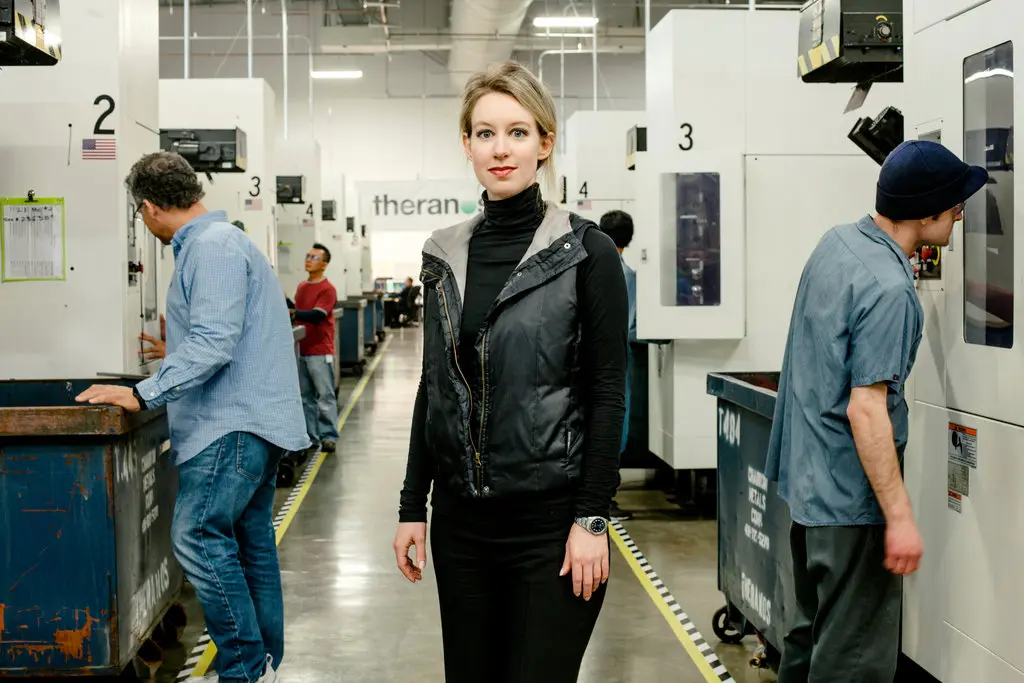
Leaders that don’t make it also speak grandly about what they want to do, but they tend to be overly flattering and defensive about what they’ve already done. There are many reasons for this latter behavior, but the main one appears to be that these leaders want to convince people of their achievements more than they want to achieve them. Contrast Elon’s decade-long public fail-fest with Jeff Bezos’ “welcome to the club” Twitter braggadocio before Blue Origin had even achieved orbit (they still haven’t). The sad story of Theranos makes clear its CEO was less interested in developing a new blood test than telling people about having developed a new blood test.
This pattern has two consequences. One is that engineers make good investors. A finely-tuned bullshit detector is essential in discerning the attitudes and capacities of those leading growth companies. Those who have themselves been mired in the swamp of complexity can detect in tone and manner others who are approaching ambitious tasks with the correct mix of excitement and humility. The opposite is also true. A lack of technical oversight, not unlike the brilliant but non-technical bigwigs that comprised Theranos’ board, portends a leader unwilling to submit to the scrutiny necessary in any great technical enterprise.
The second consequence is that contact with Wall Street is often a leading indicator of tech company decline. The analysis of earnings, brands, pricing power, and operational efficiency has its place. The problem is many growth companies can make grand claims, massage numbers and hype themselves as the next big thing. What’s left is to discern some aspect of character, especially among their leaders. And this is where Wall Street gets it’s signals backwards. Every conversation with analysts includes a recap of what has been done, and the pressure is on to make it sound good. This is exactly the behavior the wrong kind of CEOs optimize for, something to think about the next time you’re impressed by what a CEO has to say on an earnings call.
This presents a problem. The leaders and companies in which we should invest rarely present themselves as such, or at all. We’re instead overwhelmed by the cacophony of breathless huxters. Contrast the Microsoft of Steve “Developers! Developers! Developers!” Ballmer with the Microsoft of Satya “I like books” Nadella. Ballmer presided over 14 years of stagnation and when Nadella was appointed as his replacement in 2014, the stock dropped 1.5%. Nadella since then has retooled the massive organization, stemmed an exodus of talent, embraced open source and multi-platform ecosystems, and presided over a 54% appreciation in the company’s stock in 2 years. In one of his first earnings calls he enthusiastically laid out exactly that strategy–what was ahead–with only a perfunctory recap of what came before. During the Q&A the analysts asked the kinds of questions one asks when enamored with the sound of one’s own voice but Nadella’s strategy otherwise landed with a thud. The Microsoft of 2014 had all the same advantages as it did a year prior, the only clue it was time to buy its stock was the demure and methodical character of its new CEO.
This isn’t to say one should invest blindly in every company with a reticent CEO. But it does reveal that we are all investing, equally blindly, in the braggarts and touts that best capture our attention each quarter. As Theranos’ investors–and more tragically its employees–discovered, character matters.